📅 Monday, 13 April 2026, 08:30-18:00
📍  Landwehrstrasse 48a, 50, 64293 Darmstadt
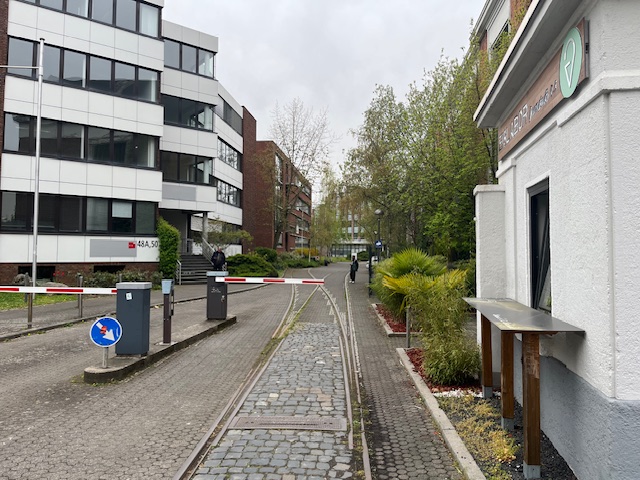
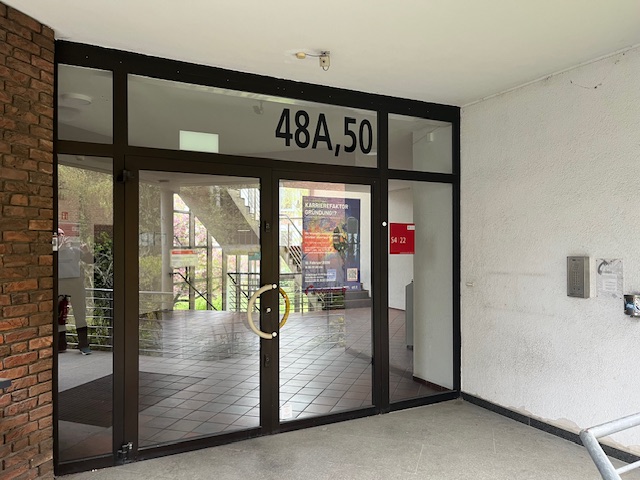
Join us for a full day of open-source hacking, learning, and collaboration! The sprints take place Monday, April 13th, 2026 — the day before PyCon DE & PyData 2026 kicks off. The sprints team provides lunch and Coffee/Mate/Diet-Coke— you bring the energy, ideas, and code. Whether you're maintaining a major library or making your first contribution, there's something for everyone.
💡 What Are Sprints?
Sprints are informal coding sessions (think: mini hackathons) where people gather to work on open-source projects, share ideas, and solve problems together. For maintainers, it's a chance to onboard new contributors and tackle long-standing issues. For participants, it's a low-barrier way to dive into real projects and see your work make an impact right away.
- Make your first open-source contribution
- Get help from project maintainers directly
- Push forward features, fix bugs, or improve documentation
- Meet other contributors and collaborators in-person
Schedule
- 08:30 - 09:00 - Doors open
- 09:00 - 09:30 - Opening session: Project lightning intros
- 09:30 - 12:30 - Sprint time
- 12:30 - 13:30 - Lunch break
- 13:30 - 17:30 - Sprint time
- 17:30 - 18:00 - Closing session: Demos and reflections
How to Attend
Everyone who wants to participate in the sprints - whether as a contributor or a project lead — needs a sprint ticket.
- Ticket sales open: Monday, February 16th, 2026
- Cost: €5
- Capacity: Limited seats, first-come-first-served
Propose a Sprint Project
Want to lead a sprint? Awesome! We're looking for open-source projects of all sizes and experience levels.
Note: Project leads also need to register as attendees (see above).
➡️ Submit Your Sprint Project
Submission deadline: 6th, April, 2026
Accepted projects will be announced on a rolling basis — no need to wait until the deadline to find out! Submit early, and we'll review and publish your project as soon as possible.
What Makes a Good Sprint Project?
Not sure if your project is a good fit? Here's what works well:
- Has open issues labeled for newcomers (e.g.,
good first issue,help wanted) - Clear onboarding — A README and CONTRIBUTING.md help participants get started quickly
- A sprint lead present — You (or a co-maintainer) should be there to guide contributors
- Welcoming to all skill levels — Even if your project is advanced, having a few beginner tasks helps
What Will You Be Asked?
When submitting, we'll ask for:
- Project name & repository link
- Brief description
- What contributors will work on during the sprint
- Skill level(s) welcome (beginner / intermediate / advanced)
- Prerequisites (if any)
- Your contact info
⚠️ Depending on the number of submissions, the organizing team may limit projects based on capacity. Accepted projects will be listed below.
Accepted Projects
Make Pixi Docs Better!
Description: Together we will make improvements to pixi's documentation by adding new user guides, improving existing pages and helping to document the py-rattler API better. On top of little improvements, we'd also like to take a wholistic look at the documentation site and suggest further improvements.
What will contributors work on during the sprint? Contributors will bring their fresh perspective to the documentation in order to let project maintainers know what isn't clear or could be better explained. During the day we'll take these recommendations and submit pull requests to address usability concerns. To help improve the Python API, we will also be focusing on improving and adding more examples to the py-rattler documentation. Contributors are encouraged to familiarize themselves with both piece of documentation before the sprint to bring their own ideas with them for what can be improved. This sprint will also be a great way for participants to get to know the project and gauge whether they would like to make more contributions in the future.
Skill level(s) welcome: Beginner, Intermediate, Advanced
Prerequisites: Working familiarity with pixi and conda are helpful but not strictly necessary! In fact, it would be great to have contributors who are brand new to using these tools to offer their unique perspectives.
Repository: pixi
Contact: Travis Hathaway
Improve the tooling powering conda-forge
Description: conda-smithy is the CLI tool that powers a lot of the automation in conda-forge: repository templates, linting, and CI service registration, among others. The codebase has grown organically and it's showing its age. In this sprint we will play the role of a conda-forge maintainer that has just onboarded the project and needs to get up-to-speed.
What will contributors work on during the sprint? There are many things we can do to improve conda-smithy:
- Measure different types of coverage and add workflows to measure them continuously on CI
- Refactor test suite to use modern
pytestidioms - Add type hints to functions
- Study pre-commit hooks and which ones to use
- Propose a deprecation policy to remove dead or unsupported code
- Tidy up inconsistencies or outdated bits
- Triage issues and decide whether to close or keep open with the appropriate labels
- Improve the linter and the rules documentation
Skill level(s) welcome: Beginner, Intermediate, Advanced
Prerequisites: Knowledgeable in Python. Familiarity with pytest and unit testing. Curious about CLI tools.
Repository: conda-smithy
Contact: Jaime Rodríguez-Guerra
openSpawner
Description: A Flask-based service for automatically provisioning isolated Docker containers per user with Traefik integration. Users register, receive their own container, and a personalized subdomain.
What will contributors work on during the sprint? The integration of vcoder (VSC on the web) should be accelerated. The isolated containers should provide each user with a personalized development environment that includes Git integration, without the need for a local installation.
Skill level(s) welcome: Intermediate, Advanced
Prerequisites: Experience with Docker, Traefik, and how Spawner works (e.g., how it is used in Jupyter Hub)
Repository: openSpawner
Contact: Rainer Wieland
RDMO - Research Data Management Organiser
Description: The Research Data Management Organiser (RDMO) is a web application supporting research projects in the planning, implementation and administration of all research data management tasks. It provides a collaborative platform for groups of researchers with guided interviews to support, for example, in complying with funding agencies‘ requirements. RDMO is an Open Source project that started its development in 2015. It is build upon the Django Web Framework and leverages the Django REST framework to provide its API, and implements React as frontend.
What will contributors work on during the sprint? During the sprint we want to explore and implement the MCP Protocol for the RDMO backend to allow LLM services to work with RDMO projects. We will discuss different approaches or frameworks, the necessary API endpoints and RDMO plugin architecture.
Skill level(s) welcome: Intermediate, Advanced
Prerequisites: Check the development setup guide and the contributing guide.
Repository: RDMO
Contact: David Wallace
Haystack
Description: Haystack is an open-source AI orchestration framework for building context-engineered, production-ready LLM applications. Design modular pipelines and agent workflows with explicit control over retrieval, routing, memory, and generation. Built for scalable agents, RAG, multimodal applications, semantic search, and conversational systems.
What will contributors work on during the sprint? We have a variety of issues marked as "contributions wanted" including adding new integrations, updating documentation and tutorials, increasing test coverage and small new features. There are also opportunities to work on extending the capabilities of Haystack in haystack-core-integrations.
Skill level(s) welcome: Beginner, Intermediate, Advanced
Prerequisites: Need to have a GitHub account
Repository: Haystack
Contact: Julian Risch
AI-Assisted Coding & Open Source: Opportunity, Risk, and What Comes Next
Description: Vibe coding. Spec coding. Agent-generated PRs. The tools are here — built largely on open-source software. But what does that mean for the open-source world that made them possible? This sprint project is less about shipping code and more about having the conversation the community needs to have. The great irony: open-source software enabled these coding tools — but could also be their biggest casualty. Or can we do something about it?
We especially invite open-source project maintainers and contributors to join this discussion and share their first-hand experiences. Stories like Scott's, a matplotlib maintainer, over a PR submission show why this conversation matters now. There's also an ongoing GitHub community discussion on tackling low-quality contributions where maintainers share how they feel caught between today's required review rigor and a future where agentic AI-generated code makes that model increasingly unsustainable.
What will contributors work on during the sprint? During the sprint we will explore and discuss the impact of AI-assisted coding on the open-source ecosystem. Topics include: What does it mean to be a maintainer in 2026 when PRs arrive from agents, not humans? What's good practice when using AI tools to contribute to open source? How might open-source culture change — and how fast? Bring your opinions. Bring your stories. Bring your ideas for what good practice could look like.
Possible outcomes: This is an open exploration — we're not promising polished deliverables. Depending on where the conversation takes us, we might work toward:
- Initial thoughts on good practices for AI-assisted open-source contributions
- A shared collection of experiences and perspectives from participants
- Ideas worth carrying forward to an Open Space session or Lightning Talk during the main conference.
Skill level(s) welcome: Beginner, Intermediate, Advanced
Prerequisites: None — just bring your thoughts, experiences, and curiosity. This one is for everyone.
Contact: Simon Schampijer
FAQ
Do I need to choose a project when I register?
No! You don't need to decide beforehand. During the Opening Session, all projects will introduce themselves, and you can choose which one to join based on your interests and skill level.
You're also free to switch projects during the day—maybe you want to try something new after lunch, or help out where there's extra need. Flexibility is part of the fun!
Do I need a sprint ticket if I already have a PyConDE ticket?
Yes, the sprints require a separate registration. Your PyConDE conference ticket does not include sprint access. Sprint tickets are €5 and capacity is limited.
I'm new to open source—is this for me?
Absolutely! Many projects welcome first-time contributors. Look for projects marked "Beginner-friendly" in the project list. Sprint leads are there to help you get started.
What should I bring?
- Your laptop (fully charged)
- Charger
- Your development environment ready (check project READMEs beforehand)
- Curiosity and good vibes!
Do I need to stay the whole day?
No, but we encourage you to join the Opening Session (09:00) to find a project, and the Closing Session (17:30) to celebrate everyone's contributions.
Questions?
Contact us at sprints AT pycon DOT de
The Sprints are proudly supported by our Community Partner